Last updated: September 2026
Tiburon remains one of the most competitive micro-markets in Marin County. Prices sit near the top of the North Bay, inventory stays tight, and well-priced homes routinely sell above asking. The median sale price currently falls between roughly $3.0 million and $3.48 million, depending on whether condos are blended with single-family homes. The typical home goes into contract in under a month, and more than a third of recent sales closed over list price.
This report covers current pricing, how leverage splits between buyers and sellers, how values change from one neighborhood to the next, and what the next 12 months are likely to bring. It also covers specific guidance for first-time buyers and downsizers, two groups that approach this market very differently.
Tiburon Home Prices Right Now
Tiburon's pricing has held firm while much of the Bay Area has flattened. Year-over-year gains are modest, but the underlying demand indicators have strengthened: price per square foot is up nearly 5%, and the share of homes selling over asking has jumped by more than 15 points.
Metric | Current Value | Year-over-Year Change |
|---|---|---|
Median Sale Price | ~$3,000,000 – $3,477,000 | +1.2% |
Median List Price | $3,477,000 | Up from ~$3.08M in 2025 |
Price per Square Foot | ~$1,300 | +4.9% |
Median Days on Market | 26 days | +3 days |
Sale-to-List Price Ratio | 101.5% | +3.9 points |
Homes Sold Above List | 38.5% | +15.4 points |
The spread in the median sale price comes from the property mix. When single-family homes are measured on their own, the Belvedere-Tiburon median sits closer to $3.4 million and above. Blending in condos and townhomes pulls the figure toward $3.0 million.
For context, the countywide single-family median across Marin County runs about $1.72 million to $1.86 million, with price per square foot between roughly $855 and $956. Tiburon and neighboring Belvedere command the highest medians and per-square-foot values in the North Bay.
Is Tiburon a Buyer's or Seller's Market?
Tiburon is a moderate seller's market. Marin County holds about 2.3 months of housing supply, and Tiburon's single-family supply is tighter at roughly 1.5 to 2.0 months. A balanced market typically carries four to six months. At any given time, the peninsula has only about 35 to 55 active listings across single-family homes, townhomes, and condos.
Part of the demand comes from Bay Area equity gains and stock performance, which give many buyers substantial down payments. That doesn't mean buyers are careless. Tiburon's market is sharply split, and a home's condition and pricing strategy decide which side of that split it lands on.
The 30-Day Divide
The first 30 days on market largely determine a Tiburon home's outcome. Turnkey, well-located homes that go into contract in that window often sell for 103% to 108% of their original list price, and competitive single-family listings have reached 105% to 110%.
Homes that miss that window because of overpricing or deferred maintenance tend to lose momentum quickly. Once a listing passes the 30-day mark, closing prices typically drop to 92% to 96% of list. At that point the negotiating power shifts noticeably toward the buyer.
For sellers, the lesson is that pricing accurately at launch nets more than pricing high and negotiating down. A realistic home valuation before listing, combined with thoughtful preparation, keeps a property on the right side of the divide. Timing matters too, and seasonal patterns in home sales affect how quickly the first-month window fills with buyers.
For buyers, winning a turnkey home in its first few weeks usually means a clean offer above list price. The best negotiating room is in homes that have lingered past 30 days, where sellers are often more flexible on price, repairs, or concessions.
How Home Prices Vary Across Tiburon's Neighborhoods
Within Tiburon, price depends on four things more than anything else: proximity to the water, direct views of San Francisco and the Golden Gate, lot size, and microclimate. The peninsula breaks into four broad pricing tiers.
Tier | Notable Neighborhoods | Typical Price Range | Price / Sq Ft | Defining Traits |
|---|---|---|---|---|
Ultra-Luxury & Waterfront | Old Tiburon, Lyford Cove, Paradise Drive | $5M – $15M+ | $1,600 – $2,200+ | Waterfront or prime view estates, walkable to downtown and the ferry |
View-Centric Hillsides | Gilmartin, Hillcrest, Marinero Heights, Via Los Altos | $3.5M – $6.5M | $1,350 – $1,650 | Panoramic bay views, contemporary multi-level homes |
Family-Centric & Walkable | Del Mar, Reedlands | $2.5M – $4.2M | $1,200 – $1,450 | Single-story layouts, level yards, near Reed Union schools |
Entry-Level & Flats | Bel Aire, Belveron, Greenwood Cove | $1.2M – $2.5M | $1,000 – $1,250 | Flatter lots, smaller original homes, townhomes, and condos |
Old Tiburon and Lyford Cove sit just above Main Street. They combine historic character with direct city views and a short walk to the ferry, and homes here regularly exceed $1,800 per square foot.
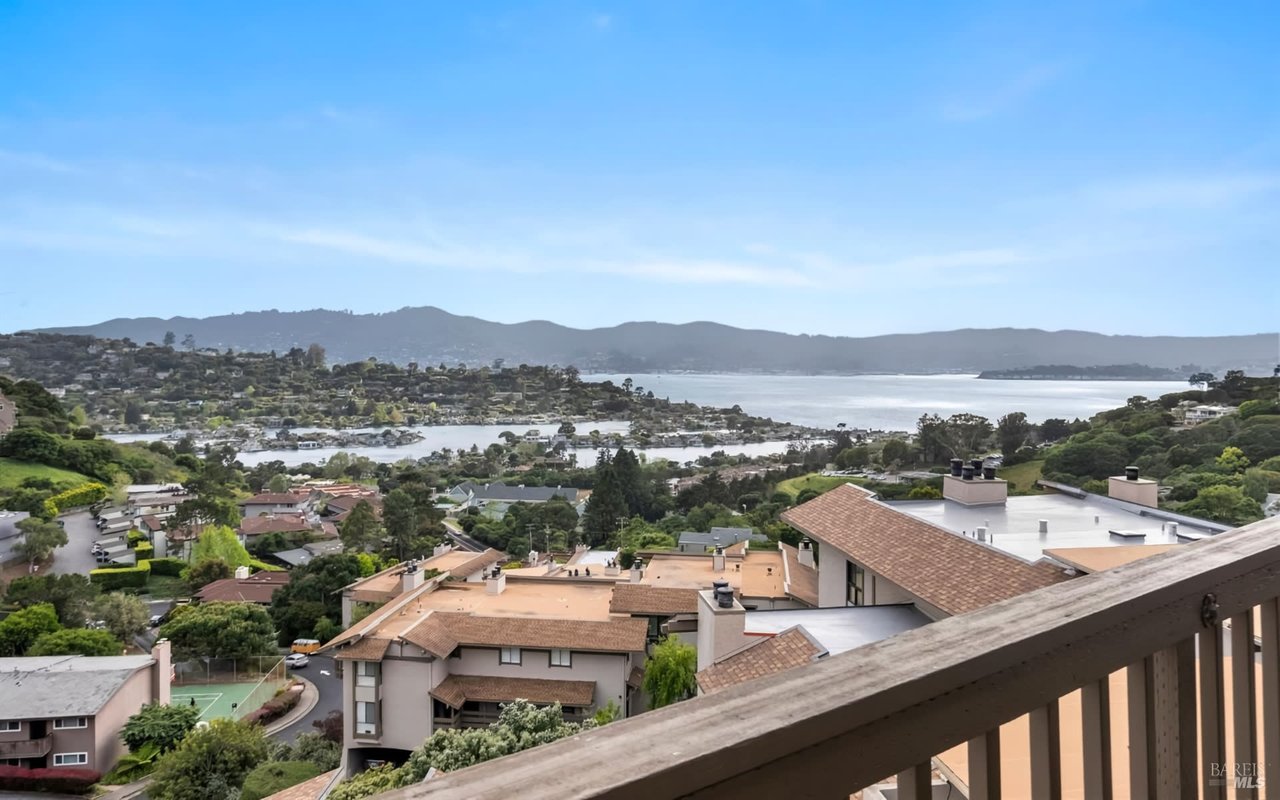
The hillside neighborhoods trade some walkability for elevation. Streets like Hillcrest Drive, where Tracy has represented a view home on the peninsula, are known for sweeping bay panoramas and larger contemporary floor plans.
Del Mar and Reedlands sit farther inland along Tiburon Boulevard. Buyers here are often choosing convenience: level lots and proximity to Del Mar Middle School keep demand strong at price points well below the waterfront hillsides.
Bel Aire and Belveron are Tiburon's entry points. Belveron is largely updated mid-century ranch homes in the flats near Blackie's Pasture. Bel Aire mixes condos, townhomes, and smaller single-family homes.
The Paradise Drive corridor along the eastern side of the peninsula is the most varied stretch. Secluded coastal estates above $10 million sit along the same road as modest mid-century hillside homes.
A broader view of these areas is on the Tiburon and Belvedere community page.
What Drives Demand in Tiburon
Tiburon's prices rest on a combination few Bay Area towns can match: highly rated public schools, a direct water commute to San Francisco, and a walkable waterfront downtown. The peninsula's geography limits how much new housing can ever be built.
Public Schools
Schools are one of the strongest reasons families relocate here. The Reed Union School District serves grades K–8 across three campuses:
- Reed Elementary (K–2)
- Bel Aire Elementary (3–5)
- Del Mar Middle School (6–8)
The district ranks among the top public school districts in California, with students consistently scoring well above state averages. High schoolers attend Redwood High School in Larkspur, part of the Tamalpais Union High School District and among the top-ranked public high schools in Marin County and the Bay Area. A full breakdown is in Tracy's guide to schools in Marin County. Families weighing the move can also see how family life in Tiburon fits around those campuses.
The Ferry Commute
For professionals who work in San Francisco, the Golden Gate Ferry from downtown Tiburon reaches the San Francisco Ferry Building in about 30 minutes. That's a genuine lifestyle advantage over the Highway 101 corridor. Driving to the city covers roughly 17 miles across the Golden Gate Bridge and typically takes 30 to 45 minutes depending on traffic. This commute is a recurring theme for people moving to Tiburon, and hybrid workers in particular value it.
Downtown and Ark Row
Main Street gives Tiburon a village center with real character. Ark Row, a line of late-19th-century houseboats that were floated into the lagoon and later grounded permanently, now holds boutiques, galleries, and cafes. The story reflects the area's layered heritage and history.
The waterfront dining scene adds to the draw. Sam's Anchor Cafe, The Bungalow Kitchen by Michael Mina, and Malibu Farm all offer outdoor seating over the water facing Angel Island and the city. Locals have more favorites among the best restaurants in Tiburon and the town's local shops.
Outdoor Access
The 2.7-mile paved Tiburon Bike Path runs along Richardson Bay from Blackie's Pasture. It's a daily route for runners, cyclists, and families. Tiburon is also the main ferry gateway to Angel Island State Park. These and other outdoor activities in Tiburon shape daily life here as much as the views do.
Limited Land
Tiburon is a small peninsula, and new supply is limited. High land costs, strict zoning, and custom construction running roughly $880 to $1,375 or more per square foot make new building rare. Resale homes carry the market, and scarcity underpins long-term values.
Buying Your First Home in Tiburon
A first home in Tiburon is ambitious but achievable, usually through condos and townhomes. With single-family homes averaging above $3.4 million, attached housing lets buyers live in Tiburon, send children to Reed Union schools, and use the ferry, often at half the cost of a detached home or less.
Condos and townhomes make up most first-time purchases in Tiburon, typically with one to three bedrooms:
- One-bedroom condos generally trade between $700,000 and $950,000, mostly in the Lyford Drive complexes and around Bel Aire.
- Two-bedroom units in Lyford Drive and Greenwood Cove run about $1.0 million to $1.5 million.
- Three-bedroom townhomes in Red Hill Circle, Lagoon Vista, and Mar East range from roughly $1.7 million to $2.5 million.
Recent sales show where these entry points actually land:
- 99 Lyford Drive #47, a one-bedroom, one-bath unit of 810 square feet, sold for $716,625.
- 80 Lyford Drive #8, a two-bedroom unit of 1,309 square feet, sold for $1,055,000.
- 6 Greenwood Cove Drive #C, a two-bedroom, two-bath home of 1,509 square feet, sold for $1,290,000.
- At the upper end of the entry tier, 121 Red Hill Circle, a 2,136-square-foot three-bedroom townhome, sold for $2,000,000. Tracy has written about what it's like to live in Red Hill Circle.
Costs to Plan For
HOA dues in Tiburon generally range from $600 to more than $1,500 per month, depending on grounds care, exterior maintenance, amenities, and building insurance. Lenders count these dues in your debt-to-income ratio, so they directly affect how much you qualify for.
The HOA's reserve study deserves careful review before you make an offer. Many Tiburon complexes date to the 1960s and 1970s and may face special assessments for roofs, siding, or the balcony and deck inspections California requires under SB 326. A thorough pre-purchase home inspection should go hand in hand with that review.
Down payments depend on the loan type. Twenty percent down avoids private mortgage insurance on conventional loans. Loan amounts above the Marin County conforming limit fall into jumbo territory, where lenders often require at least 10% to 15% down along with strong cash reserves. These are among the common challenges for buyers in Tiburon, and each has a practical workaround.
Assistance Programs
Marin is one of California's highest-cost counties, so statewide programs allow higher income limits here:
- California Dream for All Shared Appreciation Loan offers qualifying first-generation buyers up to 20% of the purchase price, capped at $150,000, for down payment or closing costs.
- CalHFA MyHome Assistance Program provides a junior loan of 3% to 3.5% of the purchase price.
- Below-market-rate (BMR) ownership units occasionally come available through the Marin Housing Authority for income-qualified buyers. They sell well below market value but carry resale restrictions.
Eligibility details are in Tracy's guide to first-time homebuyer programs, loans, and grants.
Downsizing in Tiburon
For longtime owners of large hillside homes, downsizing within Tiburon often means trading stairs, landscaping, and upkeep for single-level living near the ferry and Main Street. Downsizers here generally focus on three types of housing.
Point Tiburon and the downtown waterfront are the first choice for many. The gated Point Tiburon communities include:
- Point Tiburon East
- Point Tiburon West
- Point Tiburon Bayshore
Units offer single-level floor plans or elevator access, and they sit steps from Shoreline Park, Main Street, and the San Francisco ferry. Prices typically range from $1.8 million to more than $3.5 million, depending on size and how directly the unit faces the city or the water. The HOA handles exterior maintenance, and groceries, shops, and restaurants are reachable on level ground.
Single-story homes in the flats suit downsizers who want to keep a small yard and skip HOA dues. Belveron Gardens is known for 1950s ranch homes near Blackie's Pasture, generally priced between $2.0 million and $2.8 million. Lower Del Mar and Bel Aire offer similar flat lots with homes of about 1,500 to 2,200 square feet and easy access to the bike path.
Red Hill Circle and Lagoon Vista offer attached hillside homes above Richardson Bay, typically between $1.7 million and $2.5 million. Some units include a main-floor primary suite, but most have interior stairs, so these fit downsizers who want views at a lower price per square foot and can still manage some steps.
Keeping Your Tax Base With Proposition 19
Proposition 19 is one of the strongest financial reasons to downsize within California. Homeowners who are 55 or older, severely disabled, or victims of a qualifying disaster can sell a long-held primary residence and transfer its Proposition 13 tax base to a replacement home anywhere in the state. The rules:
- The transfer can be used up to three times in a lifetime.
- The replacement must be purchased within two years before or after the sale.
- If the new home costs the same as or less than the sale price of the original, the full original tax base transfers.
- If the new home costs more, the difference in market value is added to the transferred base.
- Homeowners file Form BOE-19-B with the Marin County Assessor after both transactions close.
Here is an illustration. A homeowner bought a hillside home in 1995 that now carries an assessed value of about $800,000, with annual property taxes of roughly $9,600. They sell it for $4.5 million and buy a $2.5 million condo at Point Tiburon. Because the replacement costs less than the sale price, the entire $800,000 base transfers, and taxes stay near $9,600 per year. Without Prop 19, taxes on the condo at market value would run about $30,000 annually, a difference of more than $20,000 every year.
For sellers leaving a long-held home, the right preparation matters. Tracy has written about the upgrades worth making before reselling, and about whether selling as-is makes sense.
How Tiburon Compares to Belvedere, Mill Valley, and Corte Madera
Tiburon shares San Francisco proximity and strong schools with its southern Marin neighbors, but it differs sharply in price, terrain, and daily rhythm.
Tiburon | Belvedere | Mill Valley | Corte Madera | |
|---|---|---|---|---|
Median Single-Family Price | ~$3.0M – $3.48M | $6.3M – $8.88M+ | ~$2.13M – $2.3M | ~$1.7M – $2.0M |
Price / Sq Ft | ~$1,300 – $1,400 | $2,000+ | ~$1,013 | ~$850 – $950 |
Setting | Coastal peninsula, bay-view hillsides | Island and lagoon enclaves | Redwoods, canyons, Mt. Tam foothills | Flat valley floor, bayside trails |
SF Commute | Direct ferry (~30 min) | Ferry via Tiburon | Highway 101 or nearby ferries | Highway 101 or Larkspur Ferry |
K–8 District | Reed Union | Reed Union | Mill Valley School District | Larkspur-Corte Madera |
Belvedere is Marin's most expensive real estate. Entry-level homes start around $6 million, and waterfront estates routinely exceed $20 million. The town is almost entirely residential, so residents rely on downtown Tiburon for dining, groceries, and the ferry.
Mill Valley has a lower price per square foot, so buyers often get more space for the same budget. The feel is woodsy and artsy, centered on a lively historic square beneath Mount Tamalpais, while Tiburon reads as sunnier, more open, and nautical. There's more on what sets Mill Valley apart.
Corte Madera is often the next stop for buyers priced out of single-family homes in Tiburon or Mill Valley. Its medians are about $1.7 million to $2.0 million. It offers:
- Flat lots in neighborhoods like Christmas Tree Hill and Mariner Cove
- Immediate highway access
- Shopping at The Village at Corte Madera
It lacks Tiburon's direct ferry and waterfront village. Tracy covers the process of buying a home in Corte Madera in more depth.
Mortgage Rates and Affordability in Tiburon
Borrowing costs remain elevated, and in Tiburon nearly every single-family purchase involves a jumbo loan. Current benchmarks:
- 30-year fixed conforming loans: roughly 7.03% to 7.22%
- 30-year fixed jumbo loans: 7.27% to 7.34%
- 15-year fixed loans: 6.42% to 6.60%
- Marin County conforming loan limit for 2026: $1,249,125
With a single-family median near $3.48 million, virtually any single-family financing here exceeds the conforming limit. In September 2026, the Federal Reserve raised its benchmark rate by 25 basis points to a range of 3.75% to 4.00%. Mortgage rates track the 10-year Treasury more closely than the Fed rate, but the move reinforces a higher-for-longer borrowing environment.
The table below shows estimated monthly costs for a typical entry-level condo and a median single-family home. It assumes 20% down, a 1.25% annual property tax rate, and roughly $200 per month in hazard insurance per million dollars of value.
Scenario | Price | Loan Amount | Rate | Principal & Interest | Taxes & Insurance | HOA | Est. Monthly Total |
|---|---|---|---|---|---|---|---|
Entry-Level Condo | $1,250,000 | $1,000,000 | ~7.1% conforming | ~$6,720 | ~$1,550 | ~$850 | ~$9,100 |
Median Single-Family | $3,477,000 | $2,781,600 | ~7.3% jumbo | ~$19,070 | ~$4,300 | $0 | ~$23,400 |
You can test your own numbers with Tracy's mortgage calculator.
Strategies for Today's Rates
Buyers are using several tools to soften these costs:
- Seller-funded 2-1 buydowns lower the effective rate by two points in year one and one point in year two, bringing a 7.3% loan to about 5.3% and then 6.3%. This works well on listings that have passed the 30-day mark, where sellers are more open to concessions.
- 7/1 and 10/1 adjustable-rate mortgages are regaining traction, with initial fixed rates roughly 50 to 90 basis points below 30-year jumbo rates.
- Planning to refinance is common. Many buyers treat today's rate as temporary and aim to refinance if rates return to the 5.5% to 6.0% range.
Tiburon Real Estate Forecast for the Next 12 Months
The outlook through fall 2027 points to steady, moderate appreciation and continued tight inventory. Neither a sharp price surge nor a correction is expected, and Tiburon should remain a moderate seller's market.
Prices. Forecasts from the California Association of Realtors and regional indicators project statewide median price growth of about 3% to 4%, with prime coastal markets like Marin expected to gain 3% to 6%. For Tiburon, that would move the single-family median from about $3.48 million toward $3.6 million to $3.7 million. Condos and townhomes are expected to gain a steady 3% to 4%, keeping their role as the main entry point under $2 million.
Rates. Mortgage rates are expected to ease gradually toward 6.0% to 6.5%. Many longtime Tiburon owners hold sub-3% mortgages and will stay reluctant to sell, but lower rates should encourage some move-up activity. Slightly lower jumbo rates would also stretch buyer budgets and sustain competition for turnkey homes under $4 million.
Inventory. Active single-family listings are likely to hover between 35 and 50, with months of supply between 1.8 and 2.3. The constraints on land and construction described above will keep new supply minimal.
Buyer behavior. The two-tier dynamic should persist. Renovated homes with views or level yards are expected to sell within 14 to 21 days at 102% to 106% of list. Fixers and overpriced listings will likely sit 30 to 45 days and need 5% to 10% price reductions before attracting buyers.
Market Factor | Current | 12-Month Forecast | What It Means |
|---|---|---|---|
Median Single-Family Price | ~$3,477,000 | $3,600,000 – $3,680,000 | Steady 3%–5% appreciation |
30-Year Jumbo Rate | ~7.3% | 6.0% – 6.5% | Modest boost to purchasing power |
Months of Supply | ~2.0 | 1.8 – 2.3 | Seller's market continues |
Days on Market | ~26 | 22 – 28 | Fast for turnkey, slow for overpriced |
Frequently Asked Questions About the Tiburon Real Estate Market
Is Tiburon, CA a seller's market? Yes. With roughly 1.5 to 2.0 months of single-family supply and more than a third of homes selling above asking, sellers hold the advantage. Well-priced turnkey homes typically go into contract within about 24 to 26 days, while overpriced listings give buyers room to negotiate.
How much do homes cost in Tiburon? The median sale price ranges from about $3.0 million to $3.5 million depending on the property mix. Condos and townhomes start around $700,000 and run past $1.8 million. Median single-family homes fall between $3.4 million and $4.5 million, and waterfront and view estates range from $5 million to more than $15 million.
What is the average price per square foot in Tiburon? About $1,300 to $1,360 per square foot overall. Homes with direct waterfront access or panoramic views of the city and Golden Gate Bridge often reach $1,600 to $2,200 or more.
Why is Tiburon real estate so expensive? Four factors drive it: highly rated Reed Union and Redwood High schools, a 30-minute ferry to San Francisco, sweeping views of Angel Island and the city, and a peninsula with very little buildable land left.
How long is the ferry from Tiburon to San Francisco? About 30 minutes on the Golden Gate Ferry from downtown Tiburon to the San Francisco Ferry Building.
What types of homes are available in Tiburon? Tiburon offers:
- Custom waterfront and hillside estates, from mid-century modern to Mediterranean and contemporary
- Single-level ranch homes in flat neighborhoods like Belveron and Bel Aire
- Condos and townhomes near downtown and along Richardson Bay, including Point Tiburon
You can browse what's available now through the Marin County home search.
Navigating the Tiburon Market With Tracy Curtis
A market this segmented rewards local judgment. Two Tiburon homes with similar square footage can sell hundreds of thousands of dollars apart based on view corridors, street, or the first two weeks of a listing. Tracy Curtis is a Marin County luxury REALTOR® with Coldwell Banker Global Luxury. She works throughout Tiburon, Belvedere, Sausalito, and the surrounding southern Marin communities, representing everyone from first-time buyers finding their way into a Lyford Drive condo to longtime owners planning a Prop 19 move to the waterfront.
Her path to real estate shapes how she works. She is a former alternate on the U.S. Olympic Gymnastics Team. She graduated from USC's School of Cinema-Television and UCLA, then built a career in television and film before founding her own Hollywood talent agency representing actors. That background shows up in her disciplined preparation, marketing instincts, and the negotiation skill she brings to every transaction. She is also deeply rooted in Marin life: a member of Marin Country Club, a regular on the trails of Mount Tamalpais and along Highway 1, and a board member of NatureBridge.
Whether you're weighing a first purchase, preparing to sell, or rethinking how much house you need, you can learn more about Tracy's approach, her process for buyers, and her process for sellers, or reach out to Tracy directly to talk through your plans for Tiburon.