2,626 people live in Ross, where the median age is 42.1 and the average individual income is $148,198. Data provided by the U.S. Census Bureau.
Total Population
Median Age
Population Density Population Density This is the number of people per square mile in a neighborhood.
Average individual Income
Ross is one of those rare places that carries a reputation far larger than its footprint. Covering just 1.6 square miles and home to fewer than 2,500 residents, it is among the smallest incorporated towns in California—and consistently among the most affluent. But what sets Ross apart isn't a statistic. It's the feeling of the place: winding lanes shaded by old-growth redwoods, stone bridges crossing a creek that runs down from the mountain, and estate homes tucked so deeply behind hedges and gates that you could drive through town and barely register that anyone lives there.
That deliberate quietness is the point. Ross has spent more than a century protecting its character through strict zoning, generous lot requirements, and a near-total absence of commercial development. The result is a town that feels less like a suburb and more like a private, wooded enclave with a single village green at its heart. For families drawn by one of the best public schools in the state, for professionals who want a warm microclimate and a 40-minute ferry commute to San Francisco, and for buyers who value privacy above all else, Ross occupies a category almost entirely its own.
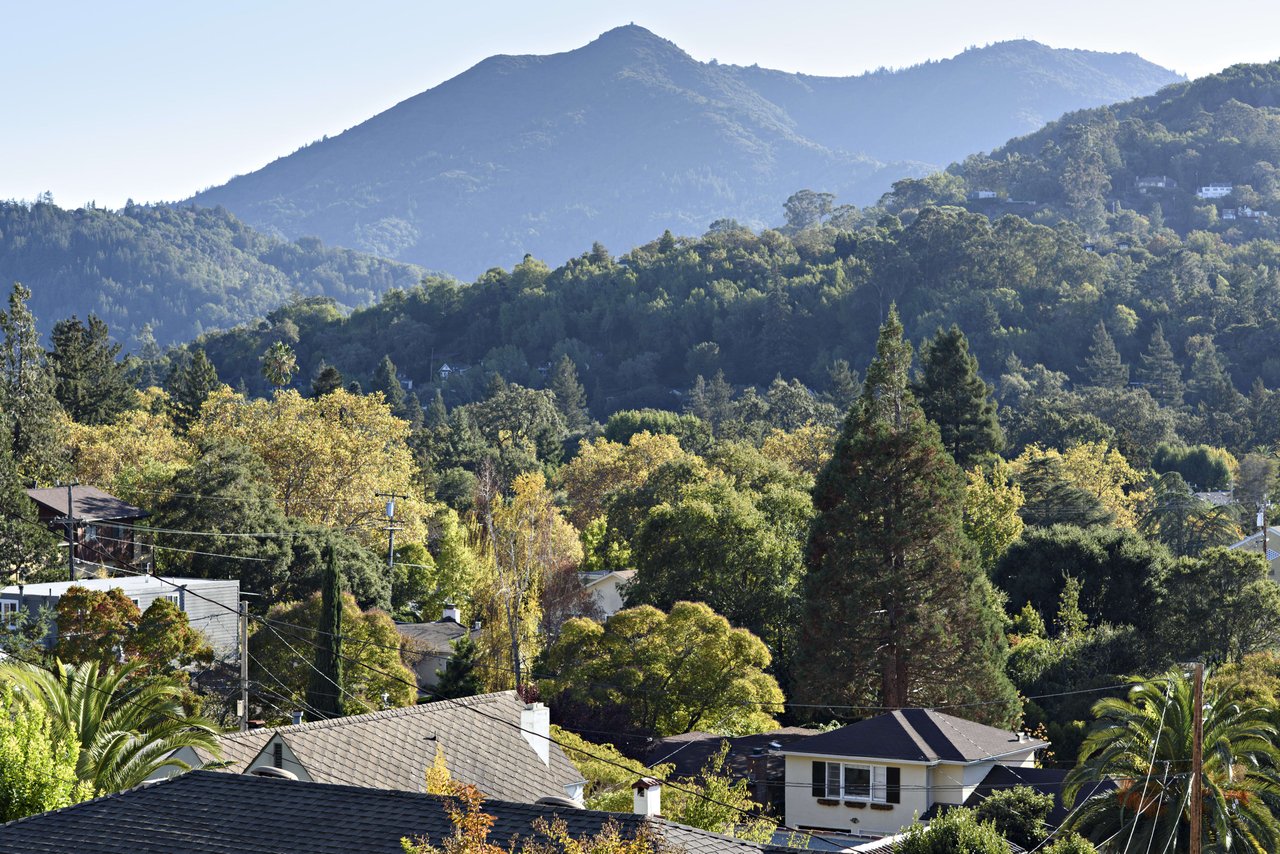
Ross sits in central Marin County, at the eastern base of Mount Tamalpais, in the heart of the Ross Valley. San Anselmo borders it to the north, Kentfield to the south and east, and San Rafael—the county seat—lies just northeast over the hills. That central position is a large part of the appeal: you are minutes from the amenities of larger towns while remaining insulated from their traffic and density.
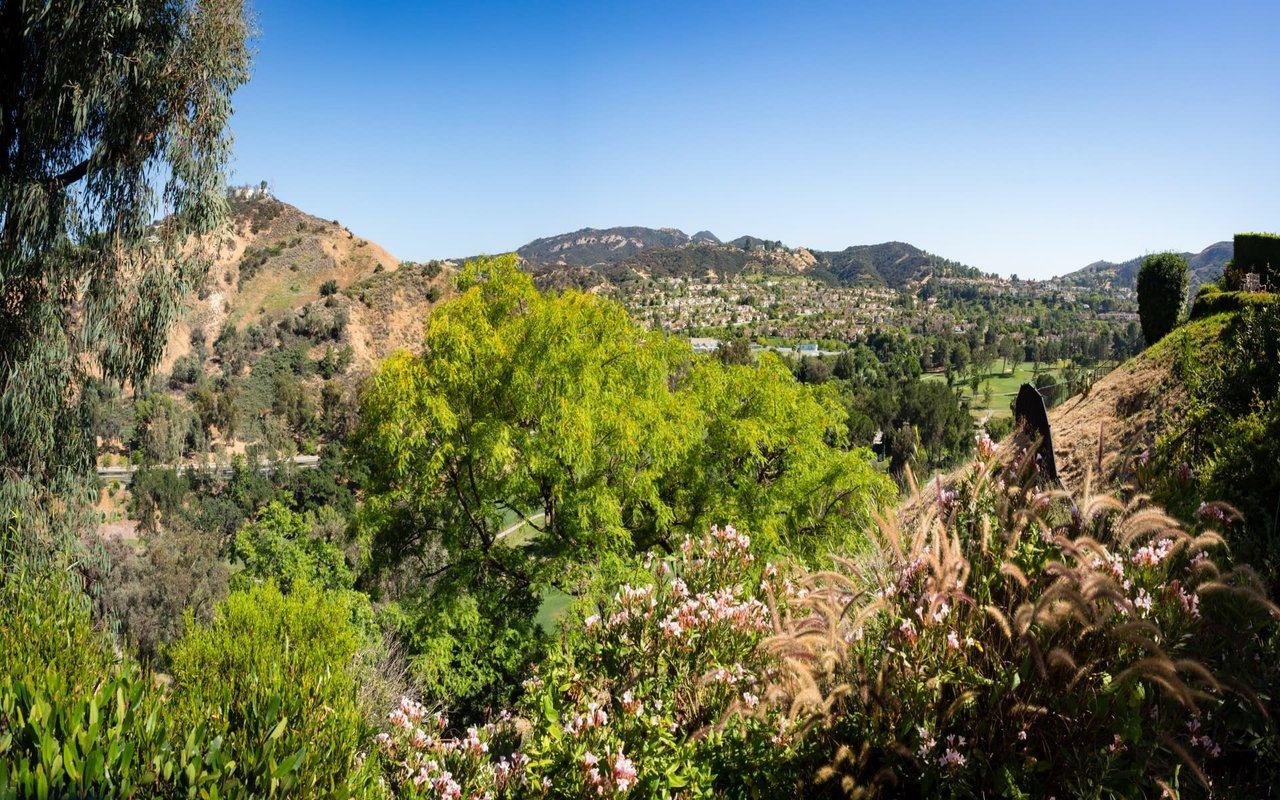
The town's setting shapes daily life more than almost anything else. Because the spine of Mount Tamalpais shields Ross from the coastal marine fog that rolls over much of the Bay Area, the town enjoys a warm, sunny Mediterranean microclimate that neighboring coastal communities simply don't get. Ross Creek trickles down from Phoenix Lake, joins Corte Madera Creek, and winds through the center of town beneath a dense canopy of redwood, oak, and bay laurel.
Unlike San Anselmo or Larkspur, with their multi-block downtowns, Ross is almost entirely residential. Its village center, Ross Common, serves as the single civic anchor, surrounded by tree-lined lanes, historic bridges, and high-walled estate properties. It's a geography that quietly enforces the town's character—there is simply nowhere for sprawl to take hold.
The land that became Ross was home to the Coast Miwok long before European settlement; they lived along Corte Madera Creek in the lush valley at the foot of the mountain. In 1840, Mexican Governor Juan Alvarado granted the region—then known as Rancho Punta de Quentin—to John Reed, Marin's first non-Native settler.
The town takes its name from James Ross, a Scottish-born merchant who made his fortune supplying goods to San Francisco during the Gold Rush. In 1857, he purchased 1,100 acres of the rancho for $50,000, moved his family to the valley, and established a timber operation to harvest its dense stands of old-growth redwoods. Those logs were floated down Corte Madera Creek to help build a rapidly booming San Francisco. When James Ross died in 1862, his family sold off portions of the land, but the name stuck to both the valley and the town that grew there.
The valley's transformation into a high-society retreat came with the railroad. When the North Pacific Coast Railroad arrived in the 1870s, wealthy San Francisco businessmen—drawn by the warm weather and an easy ferry-and-train commute—bought large parcels from the Ross estate and built expansive country homes. They planted exotic trees, laid out formal gardens, and used the valley as a summer refuge from the city's chilly fog. Much of that estate character survives today.
By the early 1900s, residents recognized that formal governance was needed to protect their secluded environment from commercialization and density. The Town of Ross incorporated in 1908, and its early leaders moved quickly to establish strict zoning requiring large lot sizes, minimal commercial development, and heavy tree preservation. Those decisions echo through the town more than a century later. Ross remains one of Northern California's most carefully preserved high-end enclaves, retaining its late-19th-century aesthetic of winding lanes, stone bridges, and hidden estates embedded in a forest canopy.
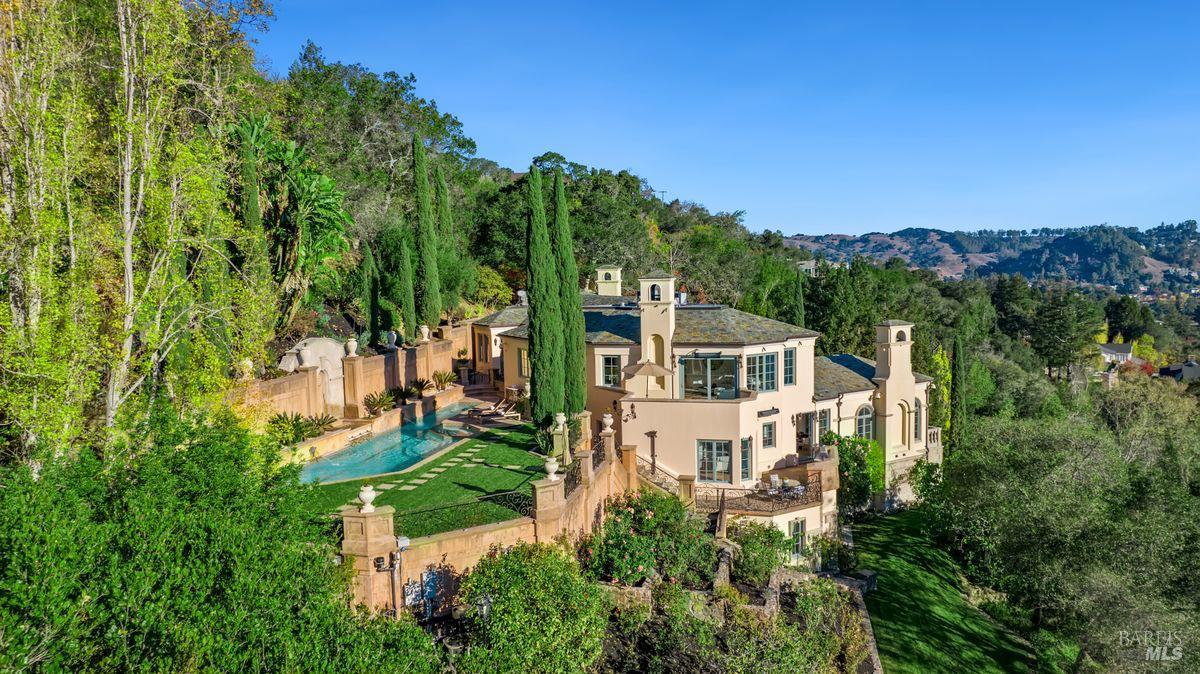
Ross holds some of the most sought-after and closely held residential real estate in the entire Bay Area. Defined by privacy, land scale, and a heritage tree canopy, the housing stock feels less like a neighborhood and more like a collection of hidden country compounds.
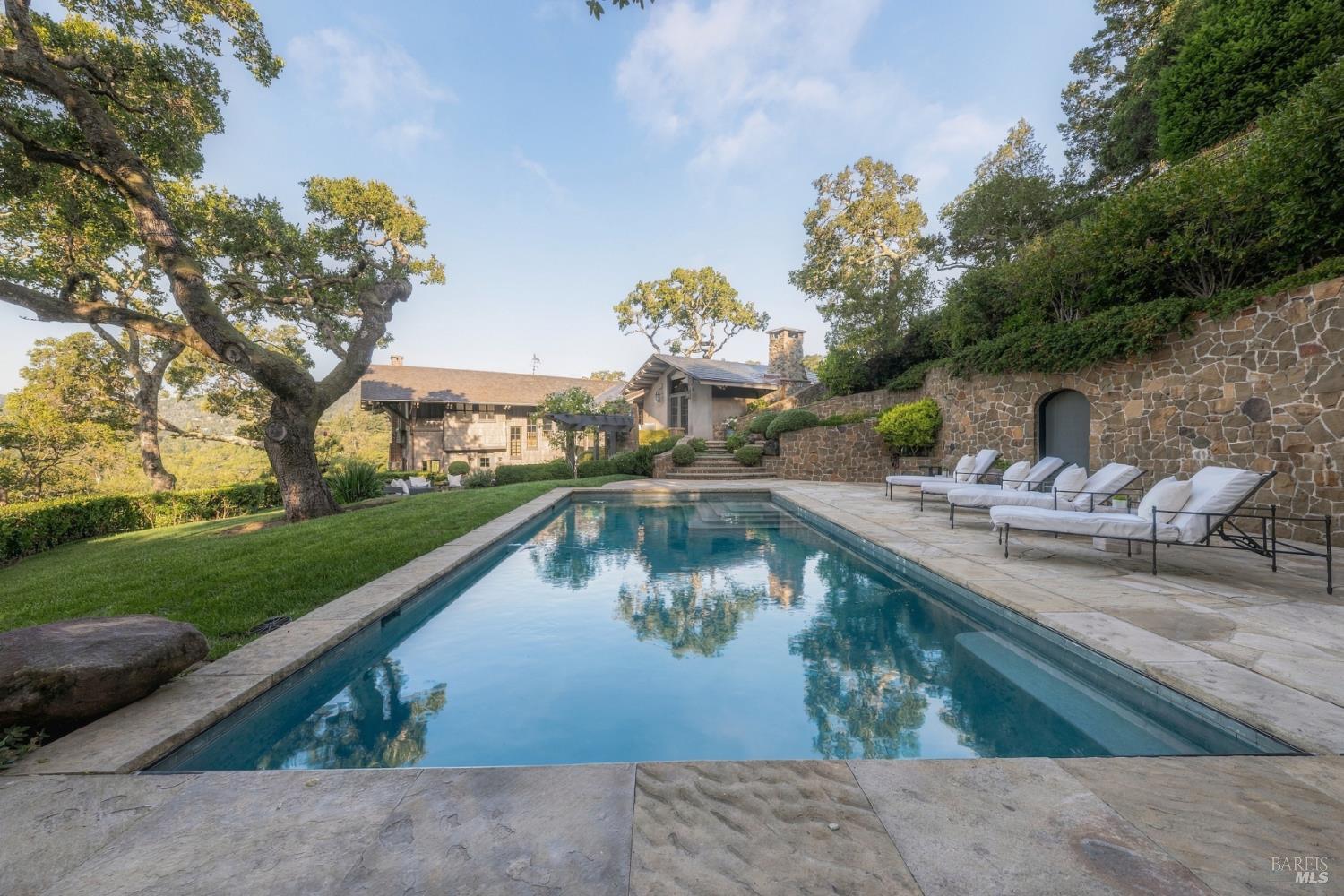
The defining feature is land. While much of Marin is built on steep hillsides, Ross occupies a rare, relatively level valley floor. Parcels typically range from half an acre to multi-acre compounds, giving homes room for motor courts, guest houses, pools, and manicured gardens—a scale that is genuinely uncommon in the region. Architecturally, this is not a place of cookie-cutter development. The town is a tapestry of classic Shingle-style manors, Craftsman estates, First Bay Area Tradition homes, and European-inspired villas built in the late 19th and early 20th centuries. Modern homes exist, but town design guidelines require them to blend into their surroundings rather than announce themselves.
Perhaps the most distinctive quality of Ross real estate is what you don't see. Drive down signature corridors like Shady Lane or Lagunitas Road and you'll spot very few houses—the town's finest properties sit tucked behind high stone walls, towering redwood hedges, gated entrances, and dense groves of oak and bay. That sense of concealment is protected by ordinance: since shortly after incorporation in 1908, cutting down major trees without permission has been prohibited, preserving a living canopy that gives every parcel an instant feeling of permanence and seclusion.
Broadly, the town's real estate falls into three areas. The valley floor, centered on Shady Lane, holds the level, grand lots and historical manors. The Lagunitas corridor extends toward the watershed and Ross School, with homes steps from the trailheads. And the hillside lanes around Upper Road trade some walkability for sweeping views and the ultimate degree of privacy. Understanding which of these a buyer is drawn to is often the first real step in a Ross home search.
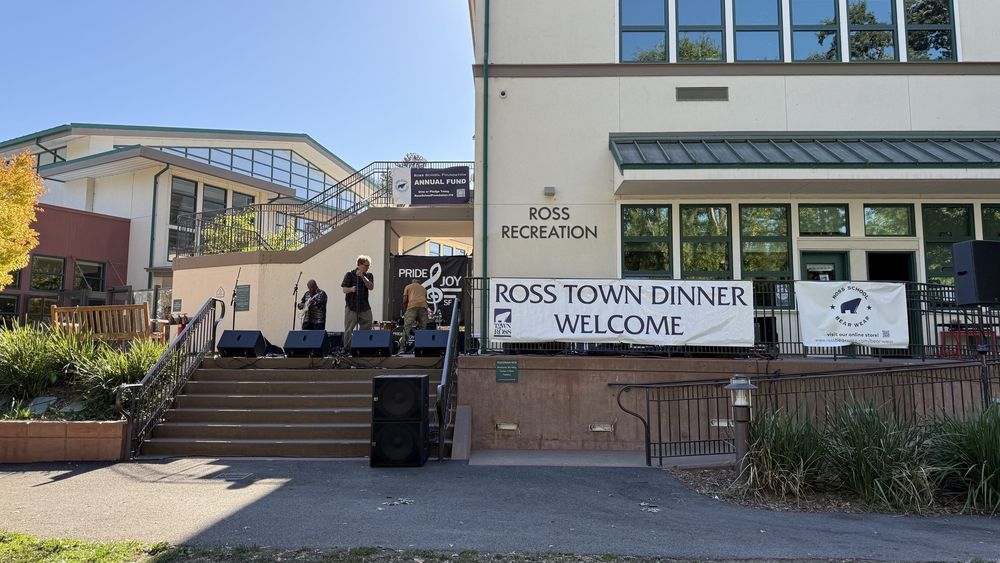
In deliberate contrast to neighboring towns and their commercial corridors, Ross has no traditional downtown at all. Civic and social life revolves almost entirely around Ross Common, a broad green expanse at the intersection of Lagunitas Road and Sir Francis Drake Boulevard that was gifted to the town by the Ross family. It functions as town square, sports field, and gathering hub all at once.
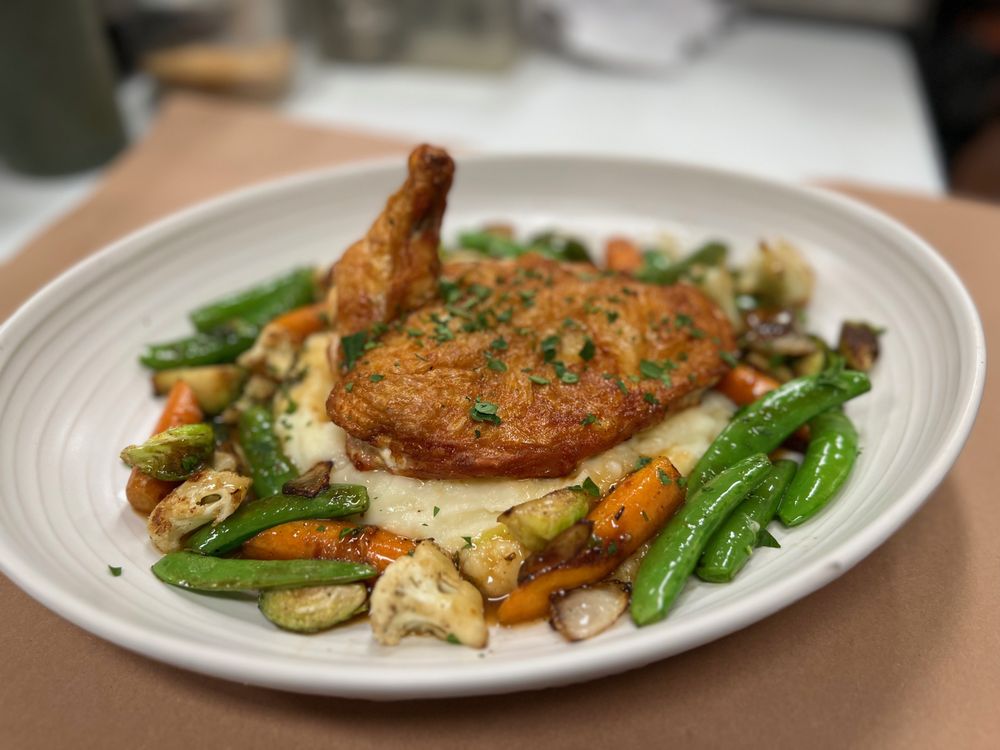
Facing the Common is a tiny, highly walkable strip of essentials—a boutique grocery, a small cafe, an acclaimed restaurant, and the local post office, where residents still gather to chat while collecting their mail. Sitting right along the Common's edge is Ross School, and because so many families live within walking or biking distance, the morning drop-off and afternoon pickup effectively set the daily rhythm of the entire town.
That rhythm is unhurried and consistent. Mornings bring parents and kids crossing the Common toward school and locals grabbing coffee before a walk along Corte Madera Creek. Midday sees walkers, cyclists, and trail runners heading up Lagunitas Road straight into Natalie Coffin Greene Park and on to Phoenix Lake. Evenings and weekends transform the Common into a social space for youth sports, community picnics, seasonal parades, and family gatherings. Residents understand the trade-off they're making: no big-box shopping and no nightlife, in exchange for tranquil streets, immediate trail access, and a close-knit village atmosphere that is increasingly hard to find.
For many families moving to Marin, the decision to settle in Ross begins and ends with Ross School. Serving roughly 340 to 350 students from kindergarten through eighth grade, it consistently ranks among the top public K–8 schools in California and functions as both an academic powerhouse and the primary social anchor of the community.
The numbers explain much of the draw. Ross School posts top-tier state test scores—frequently above 90% proficiency in math and reading—alongside a low student-to-teacher ratio of roughly 12:1 to 13:1 and small class sizes averaging around 18 children. Just as notably, while many public districts have cut enrichment, Ross maintains robust Visual and Performing Arts programming, dedicated STEM labs, instrumental music beginning in fourth grade, and Spanish instruction starting in the lower grades.
What makes the school more than a set of statistics is how it shapes life in town. Located on Lagunitas Road next to Ross Common, it allows the vast majority of local children to walk, scooter, or bike to campus every day through safe, tree-lined lanes. And because Ross is a single-school district, parents form tight bonds early; school functions, sports on the Common, and local fundraisers naturally weave families into the town's social fabric. Enrolling a child at Ross School isn't just an educational choice here—it's the front door to the community itself.
While Ross School handles primary education, families have access to world-class private options within the town borders and in the immediate area.
The most prominent is The Branson School, one of Northern California's premier co-educational independent high schools, set on a secluded 17-acre hillside campus at 39 Fernhill Avenue in Ross. Founded in 1920, Branson enrolls roughly 420 students in grades 9 through 12 with a tight 8:1 student-to-teacher ratio and average class sizes of 14 to 17. Its accelerated college-preparatory curriculum is celebrated for sending graduates to top universities nationwide, including Ivy League schools, Stanford, and UCLA. Beyond academics, the school fields competitive regional sports teams and features modern facilities, including a LEED Platinum–certified Student Commons. Admission is highly competitive, drawing applicants from more than 80 middle schools across the Bay Area.
Families seeking private education at other grade levels have several prestigious options within a short drive:
School | Location | Grades | Character |
|---|---|---|---|
Marin Country Day School | Corte Madera | K–8 | Progressive, independent education on a 35-acre bayfront campus |
San Domenico School | San Anselmo | PreK–12 | California's oldest independent school; inquiry-based learning, strong arts and sustainability, boarding for upper grades |
Marin Academy | San Rafael | 9–12 | High-performing independent high school just northeast in downtown San Rafael |
Saint Isabella School | San Rafael | K–8 | Traditional Catholic education serving local parishes |
For families on the public track, students completing eighth grade at Ross School typically matriculate into Redwood High School—the top-performing public high school in the Tamalpais Union High School District—or transition into elite private schools like Branson or Marin Academy. Few places offer this range of excellent pathways within such a small radius.
One of the greatest privileges of living in Ross is that world-class nature doesn't require a weekend drive—it begins at the end of Lagunitas Road. Natalie Coffin Greene Park sits at the westernmost tip of the road and serves as the shaded threshold where the residential neighborhood transitions directly into the Marin Municipal Water District Watershed. The park offers a heavily canopied lawn, picnic tables, and Ross Creek babbling alongside the trail, and locals routinely walk or bike straight out their front doors and into it without ever getting in a car.
A brief, steady climb from the park entrance brings you to Phoenix Lake, a tranquil reservoir ringed by redwoods, Douglas firs, and oak-wooded hillsides that is widely regarded as one of the most scenic spots in all of Marin. From its shores, an extensive web of fire roads and single-track trails unfolds toward Mount Tamalpais. The Phoenix Lake Loop, at roughly 2.7 miles, is an easy-to-moderate shoreline circuit popular with runners, dog walkers, and families. The Yolanda Trail winds up the slopes above the lake, rewarding hikers with sweeping valley views and spring wildflowers. And for serious hikers and mountain bikers, Eldridge Grade and the watershed connections climb all the way to Mount Tam's East Peak or link west toward Bon Tempe and Alpine Lakes. Having this at the end of your street is the kind of amenity that no square footage can replicate.
If Ross Common is the town's athletic and social center, the Marin Art & Garden Center is its artistic and botanical heart. Located on Sir Francis Drake Boulevard, this nonprofit 11-acre public garden and cultural facility was saved from developer subdivision by a group of forward-thinking local women in 1945—a piece of preservation history very much in keeping with the town's character.
The grounds hold curated display gardens, rare specimen trees including a historic dawn redwood, a rose garden, and serene lawns open to the public year-round for walks and picnics. Throughout the year, the center hosts seasonal art exhibitions, lectures, outdoor summer concert series, and horticultural workshops. Tucked within the grounds is the Barn Theatre, home to the Ross Valley Players—one of the oldest continuously operating community theater companies in California, founded in 1930. The center also provides a romantic backdrop for weddings, memorials, and nonprofit fundraisers.
Together with Phoenix Lake, the Marin Art & Garden Center gives Ross a rare double identity: a town where you can hike miles of wild mountain watershed in the morning and take in an outdoor chamber music concert or art exhibition the same afternoon.
In a town where quiet elegance and outdoor life intersect, athletic traditions run deep—though they look nothing like sprawling commercial gyms. Recreation in Ross is grounded in nature, local clubs, and generations of tradition.
At the center of the town's social and racquet-sports scene is the Lagunitas Country Club, founded in 1904 and tucked into the redwoods along Lagunitas Road. This private, family-centric club has the feel of a rustic retreat rather than a formal golf club. It offers six hard tennis courts along with platform (paddle) tennis courts that draw crowds in the cooler months, plus a heated pool and a classic clubhouse that anchor summer life with youth swim meets, clinics, and weekend mixers. There's no formal dress code and no pretense—just an unpretentious "camp" atmosphere where generations of Ross families have learned to swim and play tennis.
Beyond the club, endurance sport is simply woven into the lifestyle. Ross sits near the birthplace of mountain biking, and with Mount Tamalpais in the backyard, cyclists step out their front doors to tackle iconic rides like the climb up Eldridge Grade or loops around the watershed lakes. Trail running and hiking are practically local religion, ranging from casual morning jogs around Phoenix Lake to ultramarathon training up to the East Peak. Youth sports round out the picture, with Ross Recreation programs and Little League filling Ross Common on weekends.
Despite its secluded, woodsy feel, Ross is surprisingly well connected to major Bay Area employment hubs. Sitting roughly 16 miles north of San Francisco, it gives commuters several efficient options.
Mode | Route and Details | Approx. Time |
|---|---|---|
Larkspur Ferry (preferred) | 7-minute drive to the terminal, then the Golden Gate Ferry to the San Francisco Ferry Building | ~40–45 min total |
Driving (US-101) | Sir Francis Drake Blvd to US-101 South over the Golden Gate Bridge | 30 min off-peak / 45–60 min at rush |
Golden Gate Transit bus | Express commuter buses along Sir Francis Drake Blvd, direct to the Financial District | 45–55 min |
Air travel | South to SFO or east across the Richmond–San Rafael Bridge to OAK | 40–50 min to SFO / 35–45 min to OAK |
For regional trips, the nearest SMART train stations in Larkspur and San Rafael offer rail service north through Marin and Sonoma counties toward Santa Rosa and Windsor. Heading east on Sir Francis Drake Boulevard provides quick access to the Richmond–San Rafael Bridge and I-580, connecting Ross to Berkeley, Oakland, and the broader East Bay within 30 to 40 minutes.
Locals will tell you the Larkspur Ferry is the crown jewel of the commute. Instead of sitting in Highway 101 traffic, residents work on Wi-Fi or relax with a beverage on the Bay, taking in views of Alcatraz and the Golden Gate along the way. It's the kind of daily experience that quietly reframes what a commute can be.
As one of Northern California's wealthiest enclaves, Ross carries a substantial price tag, shaped by high real estate values, strict land-use conservation, and a small, established population of under 2,500.
Median home values generally hover in the range of $3.5M to $4.8M, while sprawling estate properties on Shady Lane or Lagunitas Road frequently trade anywhere from $7M to $15M and beyond. Entry-level properties—smaller cottages or homes along the busier Sir Francis Drake border—rarely list below $2M. Median household income consistently tops $250,000 a year, with the average considerably higher. Just as important for buyers to understand is how illiquid this market is: with fewer than 900 households in the town limits, only a couple dozen homes change hands in a typical year, and buyers often wait patiently for a specific street or lot type to become available. Timing and local relationships matter here more than in almost any other Marin market.
The town's high bar to entry and its focus on education and privacy attract a distinct set of buyers. The most common are established couples in their 30s and 40s with school-aged children, drawn specifically to Ross School and the walkable Ross Common lifestyle. A second group is San Francisco professionals who want Marin's warmth and safety without giving up an easy Financial District commute via the ferry. A third is privacy-seeking buyers—tech founders, venture capitalists, and high-profile figures—who want a secluded compound behind gates and greenery without the isolation of a truly rural setting. Many are also multigenerational Marin families moving "up" from Mill Valley or San Francisco, with deep local roots. What unites them is a willingness to invest in privacy, schools, and setting over convenience and flash.
Ross's microclimate and topography give everyday life a relaxed, outdoor-oriented rhythm across all four seasons. Because Mount Tamalpais blocks the heavy ocean fog that so often blankets San Francisco and coastal Marin, the town enjoys markedly warmer, sunnier weather than communities just a few miles away.
Spring brings bright, clear days in the upper 60s and 70s, electric-green hillsides, and wildflowers along the trails to Phoenix Lake, with the creeks running full. Summer settles reliably into the 80s—cool in the morning, warm and sunny by afternoon, ideal for swimming at Lagunitas or hosting dinners outdoors. Autumn is, by local consensus, the best time of year: warm days, crisp air, and the deciduous trees along Shady Lane turning deep orange and red. Winter turns cozy and woodsy, with healthy rainfall that keeps Ross Creek and Corte Madera Creek flowing strong and the redwood canopy lush and vibrant.
At its core, the everyday appeal of Ross comes down to a rare blend of small-town security and immediate access to nature. A typical day might begin with a walk along the tree-canopied lanes for a morning coffee, continue with a school drop-off where everyone knows one another, unfold across an afternoon on watershed trails accessible right from the back door, and close with dinner at a local bistro or a quiet evening in a private, woodsy compound. That combination—rare in the Bay Area and rarer still this close to a major city—is what keeps Ross in a category of its own.
A town like Ross rewards buyers who understand its rhythms—the low inventory, the value placed on privacy, the way a home search often hinges on relationships and timing rather than a simple listing search. That's exactly where a knowledgeable local partner makes the difference. Tracy Curtis brings a distinctive background to that role, combining the discipline of a former U.S. Olympic gymnastics team alternate with the negotiation finesse of a longtime Hollywood talent agent, along with degrees from UCLA and USC. Since launching her real estate practice in 2019, she has built her business around transparent communication, data-driven insight for buyers, and strategic marketing for sellers, with particular expertise guiding first-time buyers and clients looking to downsize.
Her approach fits Ross well: patient, relationship-driven, and grounded in genuine care for the community. An avid hiker and cyclist who supports NatureBridge, Tracy has a real appreciation for the outdoor lifestyle that defines this corner of Marin. Whether you're drawn to a walkable spot near Ross Common, a private estate on Shady Lane, or a hillside home with sweeping views, she can help you navigate a market where the right opportunity often requires knowing where to look before it reaches the open market. To learn more or start a conversation about calling Ross home, connect with Tracy Curtis at tracycurtisrealtor.com.
There's plenty to do around Ross, including shopping, dining, nightlife, parks, and more. Data provided by Walk Score and Yelp.
Explore popular things to do in the area, including Marché Restaurant, Adventures in Writing Camp - Ross, and Ross Commons Park.
| Name | Category | Distance | Reviews |
Ratings by
Yelp
|
|---|---|---|---|---|
| Dining · $$$ | 0.42 miles | 229 reviews | 4/5 stars | |
| Active | 0.28 miles | 0 reviews | 0/5 stars | |
| Active | 0.31 miles | 3 reviews | 5/5 stars | |
| Active | 0.31 miles | 0 reviews | 0/5 stars | |
| Active | 0.42 miles | 0 reviews | 0/5 stars | |
| Active | 0.42 miles | 3 reviews | 5/5 stars | |
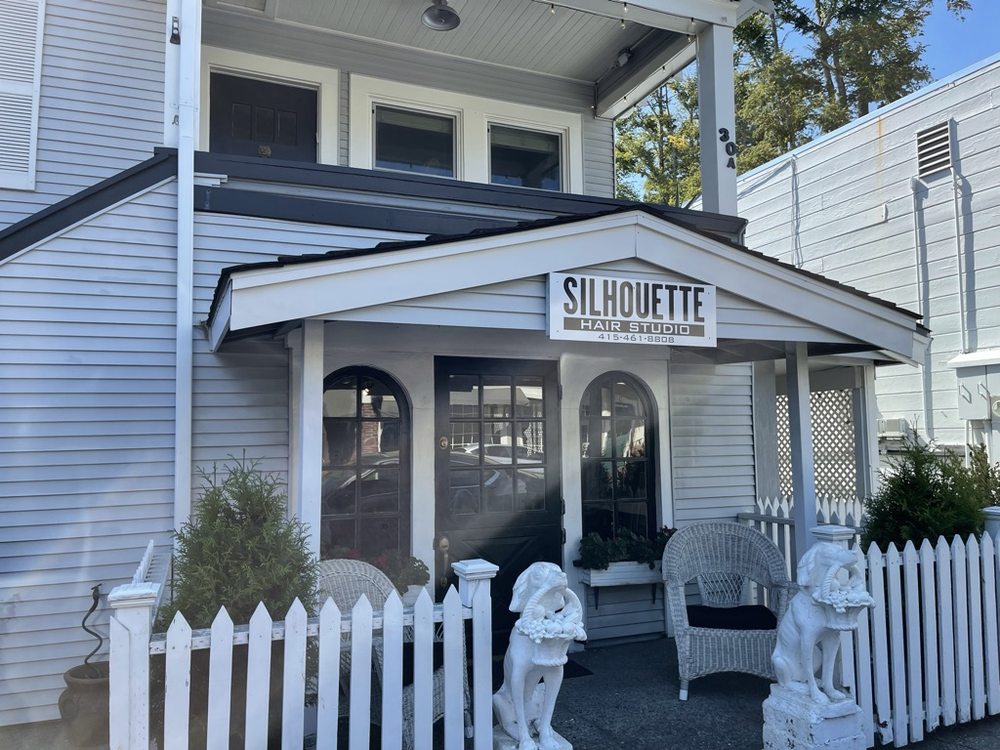
| Beauty | 0.41 miles | 23 reviews | 5/5 stars | |
| Beauty | 0.42 miles | 46 reviews | 3.8/5 stars | |
|
|
||||
|
|
||||
|
|
||||
|
|
||||
|
|
||||
|
|
Ross has 876 households, with an average household size of 2.9. Data provided by the U.S. Census Bureau. Here’s what the people living in Ross do for work — and how long it takes them to get there. Data provided by the U.S. Census Bureau. 2,626 people call Ross home. The population density is 1,685 and the largest age group is Data provided by the U.S. Census Bureau.
Total Population
Population Density Population Density This is the number of people per square mile in a neighborhood.
Median Age
Men vs Women
Population by Age Group
0-9 Years
10-17 Years
18-24 Years
25-64 Years
65-74 Years
75+ Years
Education Level
Total Households
Average Household Size
Average individual Income
Households with Children
With Children:
Without Children:
Marital Status
Blue vs White Collar Workers
Blue Collar:
White Collar: